
Warning: The magic method Vc_Manager::__wakeup() must have public visibility in /home/marcvdfu/public_html/wp-content/plugins/js_composer/include/classes/core/class-vc-manager.php on line 203

Deprecated: Optional parameter $attach_id declared before required parameter $height is implicitly treated as a required parameter in /home/marcvdfu/public_html/wp-content/plugins/js_composer/include/helpers/helpers.php on line 366

Deprecated: Optional parameter $img_url declared before required parameter $height is implicitly treated as a required parameter in /home/marcvdfu/public_html/wp-content/plugins/js_composer/include/helpers/helpers.php on line 366

Deprecated: Optional parameter $full declared before required parameter $zip_path is implicitly treated as a required parameter in /home/marcvdfu/public_html/wp-content/plugins/unyson/framework/extensions/backups/includes/module/tasks/class--fw-ext-backups-module-tasks.php on line 985

Deprecated: Optional parameter $option_id declared before required parameter $value is implicitly treated as a required parameter in /home/marcvdfu/public_html/wp-content/plugins/unyson/framework/extensions/megamenu/helpers.php on line 193

Deprecated: Optional parameter $method declared before required parameter $args is implicitly treated as a required parameter in /home/marcvdfu/public_html/wp-content/plugins/unyson/framework/extensions/social/extensions/social-facebook/class-fw-extension-social-facebook.php on line 104

Deprecated: Optional parameter $method declared before required parameter $args is implicitly treated as a required parameter in /home/marcvdfu/public_html/wp-content/plugins/unyson/framework/extensions/social/extensions/social-facebook/helpers.php on line 17
August 2020 – Dr. Marcelino A. Dechavez Scholarship Fund

The NONAS Try-Out: My Way Out of the Farm

Marcelino Dechavez On the Farm
June 1951, 12 years old
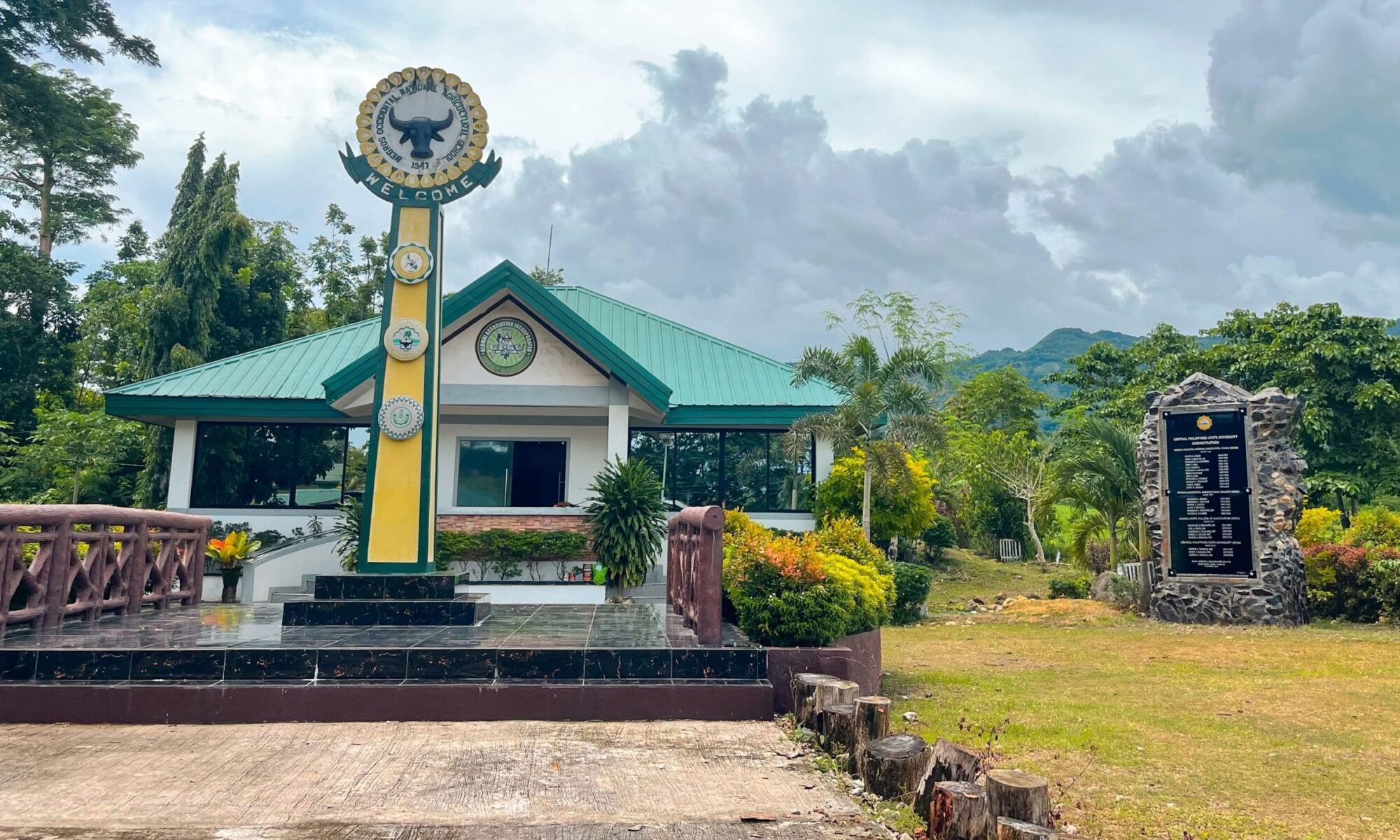
When I arrived in Kabankalan City, I discovered about 700 other student applicants getting ready to make the walk to the Negros Occidental National Agriculture School (NONAS) campus. As the length of time and distance increased, a good number of us decreased. Many could not endure the long hike and gave up without ever starting the Try-Out for school enrollment. Only about half arrived at the school site.


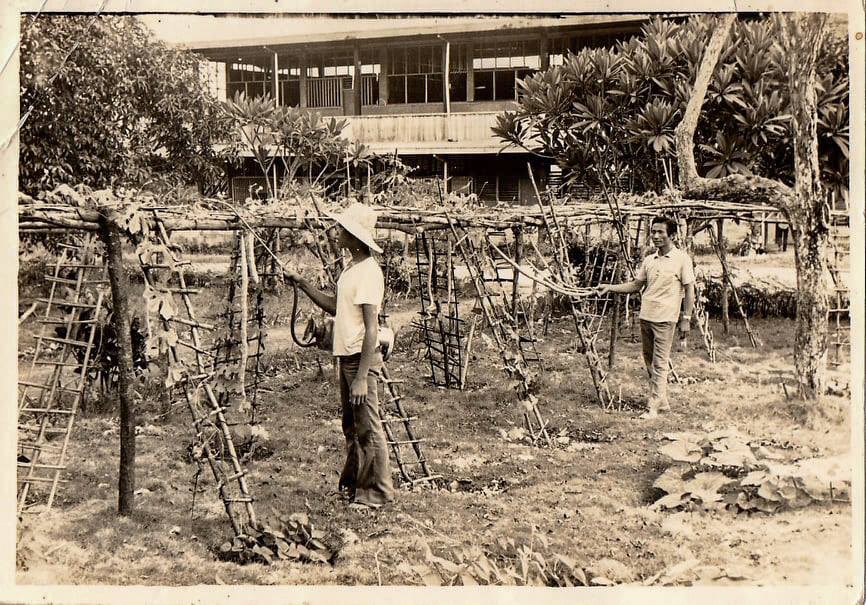
The Try-Out started the next day. The whole operation was managed by a strict Farm Manager. All the activities in the Try-Out were very similar to the farm labor I had already experienced. I was one of the smallest applicants, but our supervising student assistant was impressed with my performance. I was thankful to my Lolo Julian for the farming experience on Campo Santiago. Some of the applicants suffered accidents such as a bolo knife wound due to lack of experience. Some were awkward and didn’t know how to use the tools, like the two-man saw, shovels, spades, crowbars, etc. After two weeks of the Try-Out, the Farm Manager gave us strict instruction to wait for the acceptance letter from the NONAS authorities.


The simple warning was: NO ACCEPTANCE LETTER, NO ENROLLMENT. If you did not receive the acceptance letter, you need not come for enrollment.
After the Try-Out, I checked my performance rating with my student assistant, and he assured me that I passed with 80% rating. However, after a few days I was the only one out of eight applicants from Cadiz who had not received an acceptance letter. This did not stop me from returning to NONAS, still fueled by my burning desire to study. In my first confrontation with the Farm Manager, he confessed he disqualified me for enrollment due to me being undersized, underweight, under height and underaged.


The Farm Manager insisted that I cannot enroll because NONAS is a pioneering school, and if something like an accident happened to me, he might be jailed for enrolling a student who was physically unfit. I was still begging for the consideration and mercy of the school authorities when enrollment started. Despite my repeated appeal to the Farm Manager, he remained firm in his rejection. I stopped meeting with him and instead went in search of the Principal, a reserved Army Captain who prayed the Holy Rosary at 6:00 o’clock every evening. My first plea with him was as discouraging as with the Farm Manager. The Principal took one look at me and advised me to go home, eat, and come again next year after I grew more. I tried to meet with him everyday, and everyday, he repeated the same advice.


On the 23rd time of meeting with him, I gathered enough courage to reveal my last hope at a change of heart. I told him that I will obey his advice to leave the NONAS Campus, but I will not go home. He cut me short asking, “So what?” Bravely, I told him, “Sir, I cannot go home as a loser. This is my only opportunity to study. I beg for your compassion and mercy, but you firmly deny me. As Principal of this School, I hold you responsible for my fate and my future. Goodbye, Sir!”


As I disappeared in defeat down the descending path from the Principal’s office, the janitor ran after me with encouraging news that the Principal was summoning me. When I stood in front of the Principal, he did not look at me anymore. He was stooping over a piece of paper and writing. He gave me the paper and without looking at me instructed, “Give this to the Farm Manager.” I took the paper and thanked him. On my way to the Farm Manger’s office, I read the message,


“How about giving this small boy a chance?”
 

My Time on the Farm

Marcelino Dechavez Carabao

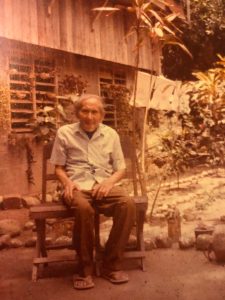
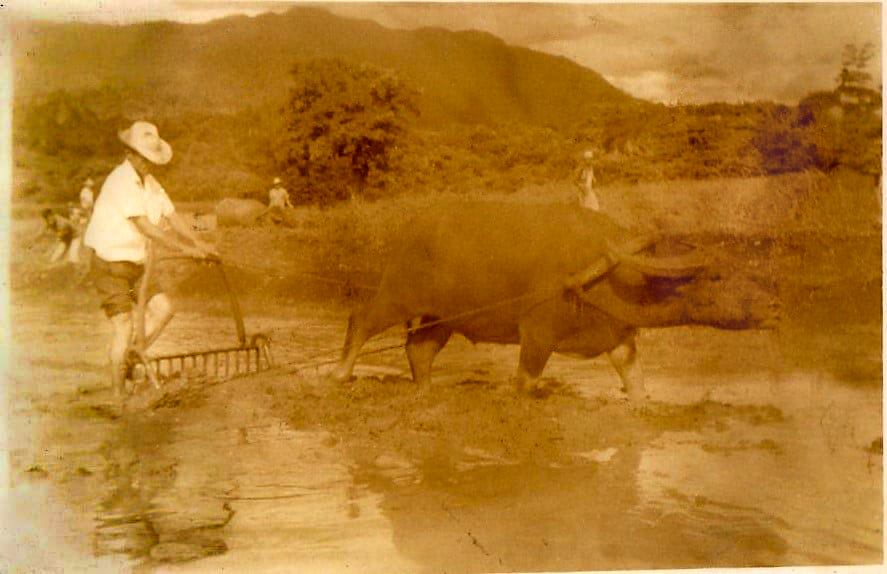
At six years old, I was made to pasture 18 heads of big carabaos (water buffalos) by our grandfather, JULIAN DECHAVEZ (referred to as “Lolo Julian”). He was the patriarch of the family, and we respected him more than our father.

Our respected patriarch, “Lolo Julian”


My herding responsibility kept me from my early primary education. In fact, my younger sister finished first grade before I did. These carabaos were the collective source of farming power on the farm. These beasts were relied on for plowing, harrowing, hauling, and pulling for transportation. Lolo Julian had about ten hectares of rice land, and these carabaos were the labor in cultivating his land. I finally attended my primary elementary education at 11 years old but continued to often miss school days due to my usual family assignment of herding, peddling, and/or bartering.


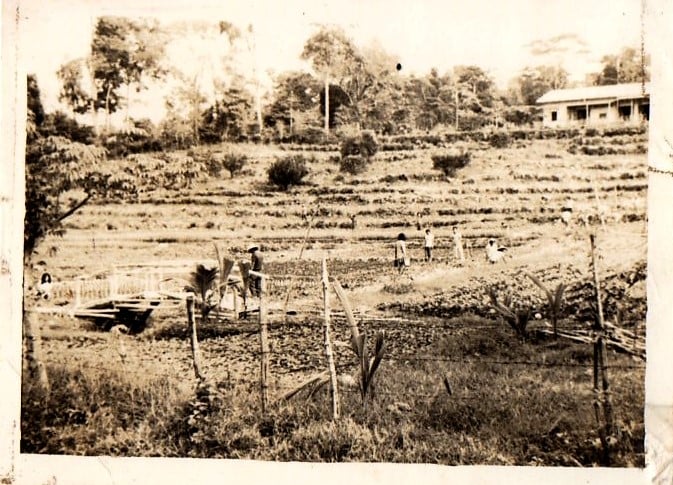
I attended my primary and elementary grades barefoot with old clothes shared by my cousin ANECITO ‘SITOY’ DECHAVEZ. Sitoy and I were close cousins. We were classmates throughout elementary, graduating with honors. After my elementary graduation, I was directed again by our grandfather to work with him on a 7-hectare farm. The land needed to be cleared first before it could be made productive.


This farm was located in the next town of Sagay, about 25 kilometers from our place in Cadiz. Since this was a pioneering project, our grandfather brought 12 well-trained carabaos to this farm located in a remote barrio called Campo Santiago. It took us 18 hours to shepherd the 12 carabaos. We left our Barrio Luna as early as 4 o’clock in the morning and arrived at Campo Santiago as late as 10 in the evening. Sitoy and I were committed to helping our grandfather realize his ambitious plan of clearing the area and making it productive. At times, Sitoy and I felt lonely while staying in the partly forested, remote farm, but we could not afford to disappoint our dear grandfather. During a short break, I asked my grandfather’s permission to visit home.


When I arrived back home, our eldest sister Magdalena handed me a letter from Aquilino Villanueva “Manong Aqui.” He was studying to the south of us at the Negros Occidental National Agriculture School (NONAS). He invited me to follow him and study at the same school. My family did not have the means to accept the invitation. I, myself, had no means other than my burning ambition to study, even if that said ambition could cost me everything.


Magdalena had a young female pig she planned to sow for future profits, but due to my desire to study, I was able to convince her to sell her only pig to help me go to school at NONAS. My very accommodating sister reluctantly sold her pig for a humble 15.00 pesos and gave all the proceeds towards my education.


The invitation letter gave me strict instruction. The first was a requirement that all applicants for the first year must undergo a two-week “try out”. This was a skills test of manual jobs such as clearing a virgin forest, constructing a road, fencing the cattle and carabao ranch, and caring for and feeding livestock, pigs, or hogs, poultry, goats and horses. Fortunately, I still had one month until the start of the try-out. The month gave me an opportunity to earn more money harvesting sugarcane in the feudalistic hacienda. I harvested sugarcane cuttings and pilings and loaded cut sugarcanes in the ‘bagon’ or flat cart that was pulled by a locomotive train and brought to the sugar mill. My daily wage as a sugarcane laborer was only .70 centavos or P21.00 per month. When the NONAS try-out started, I had earned an additional 21.00 pesos to add to my sister’s contribution.


As I was preparing my first trip to NONAS in Kabankalan, Negros Occidental, I felt like I was walking on air from my excitement, anticipation, and sense of accomplishment.


I was the master of my own destiny.

Early Childhood in the Time of War

Marcelino Dechavez Terrace Image

I, MARCELINO ANDORA DECHAVEZ, was born on September 28, 1935 and ranked number 3 of 6 siblings, 3 boys and 3 girls. My parents were FELIZA ANDORA and JESUS DECHAVEZ.   Intimately  addressed by the family members and close relatives as “Inday Fesay” was a 6th grade graduate who was the more pious  leader of the sacred Novena, the Holy Rosary,  and the other religious activities in the community. Despite his meager education of 4 years in primary school, “Toto Jesus” was elected by the community people as Barrio Teriente or head of the village/barangay/barrio.


During World War II  in the mid-1940s, the Japanese occupation in the Philippines was very hostile to able-bodied male Filipinos. Japanese soldiers and hired Korean soldiers were abundant mercenary invaders. Once male Filipinos were suspected as members of the guerilla movement, they were arrested, imprisoned, or directly killed with a bullet or fixed bayonet.


My mother favored me, and in spite of my young age, she assigned me to carry out the more critical or serious tasks that she did not entrust to my elder siblings. Due to the very dangerous situation, our father stayed home or hid in the evacuation site. Our mother and I peddled whatever produce our father had fished during the night or farmed during the day. Since it was war time, the mode of exchange was not money or currency but through bartering. We bartered our fish in exchange of root crops, sweet potato, cassava, corn, or fruits for nutrition because there was eminent famine. We could not  depend our livelihood solely on farming or fishing.


I experienced a memorable incident with a tall, handsome Japanese soldier ordering me to chase after a large rooster to catch it. As soon as I caught the rooster, he took it from me, and to my surprise, he removed  his thick jacket and placed it on me, stepped back, and saluted in English, “ Very good, boy.”


Then came the United States Armed Forces some time in 1944 to save the Philippines and other Asian countries from the military control of the Japanese Imperial Forces. Amidst the great risk  of the World War, we enjoyed witnessing the plane dog fights between the U.S. double-bodied lightning war planes and  the Japanese ‘red zero’ fighter planes. At dawn we could see the countless machine gun bullets fired by both warring planes.  U.S. fighter planes would hide in a thick cloud momentarily and skillfully make some unexpected dives and summersault combinations to mislead their opponents. Oh, how we cheered on the U.S. planes every time a Japanese zero fighter plane was gunned down. Amidst the war tensions of losing one’s  life without cost, we cheered for the victories of the U.S. fighter planes.


Fortunately, we survived the war in 1945.


Deprecated: Hook setted_transient is deprecated since version 6.8.0! Use set_transient instead. in /home/marcvdfu/public_html/wp-includes/functions.php on line 6170